SEC no-action letter unlocked Franklin Templeton’s Bybit collateral deal
The August no-action letter the SEC issued Franklin Templeton cleared the use of tokenized FOBXX and BENJI shares for cash and collateral management, enabling this week's Bybit arrangement.
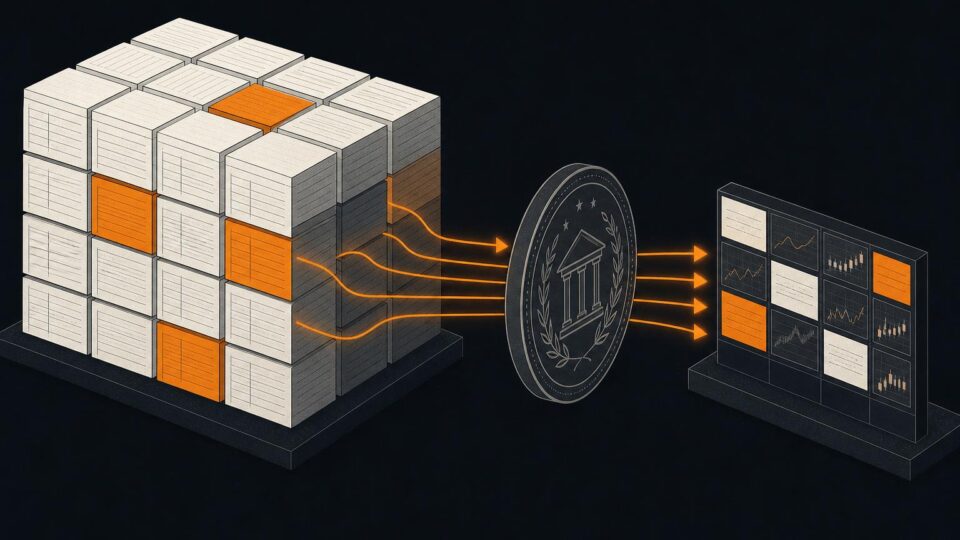
Franklin Templeton extended its tokenized collateral program to Bybit on September 28, letting the exchange’s traders pledge shares of its tokenized money market fund as trading collateral.
The step was cleared by the no-action letter the SEC issued to Franklin Templeton in August 2026, which states that the regulator will not recommend enforcement action against the firm’s registered funds for using tokenized FOBXX and BENJI tokens for cash and collateral management. A use this sensitive needed regulatory clearance, and a month after the letter, the Bybit arrangement put it into practice, with the fund holding roughly $686 million in net assets.
The regulator went first
The sequence matters for anyone tracking institutional crypto adoption. Franklin Templeton’s tokenized fund shares are issued one-to-one with shares in the Franklin OnChain U.S. Government Money Fund, or FOBXX, through the firm’s Benji Technology Platform. Wiring shares of a registered fund into exchange collateral is a use the fund needed explicit regulatory permission to make.
The SEC’s letter covered that specific use: cash and collateral management with tokenized FOBXX and BENJI. Sandy Kaul, Head of Digital Assets and Innovation at Franklin Templeton, described the effect in an interview: “So now I’m able to really look across the top exchanges and be able as an investor to use my collateral more optimally while earning yield on it,” she said. “That to me is a critical unlock to really allow the ecosystem to grow.”
What traders get
Under the Bybit arrangement, the underlying assets are held off-exchange by the regulated custody platform ByCustody, with their value mirrored inside Bybit’s trading environment, according to the announcement. Bybit users pledge BENJI shares, which represent about $686 million in net assets, to borrow Tether (USDT) or USD Coin while the underlying assets keep earning the fund’s 3.7% annualized yield (seven-day rate as of September 28). Idle margin, in other words, now pays like a money market fund.
The arrangement extends a service already live at Binance since February 11, 2026, and one the firm also offers to customers of OKX, so Bybit extends rather than starts the pattern. The firm reportedly manages more than $1.5 trillion in assets. Bybit’s go-live date for the program has not been announced.
Franklin Templeton’s tokenized offerings have reportedly crossed $2 billion in assets under management.